
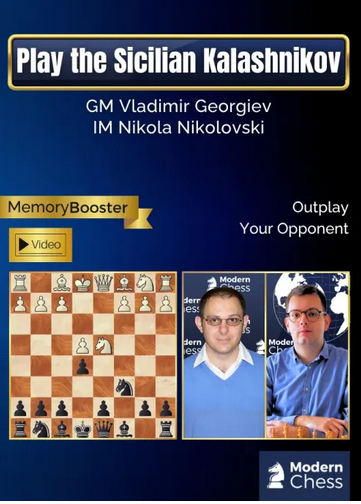
Play the Sicilian Kalashnikov + PGN April 25, 2026
Original price was: $ 100.$ 5Current price is: $ 5.
OFF - 95%In stock

Description
Reviews (0)
Description
| Category | Modern Chess, PREMIUM CHESS VIDEO |
|---|
Play the Sicilian Kalashnikov: Where Flexibility Meets Precision
The Kalashnikov variation has long existed in the shadow of its more theoretically demanding sibling, the Sveshnikov. Yet this structural similarity masks a fundamental philosophical difference. Where the Sveshnikov commits Black to theoretical battles starting from move five, the Kalashnikov preserves strategic flexibility by delaying …Nf6—a seemingly modest adjustment that reshapes the entire character of the position.
GM Vladimir Georgiev and IM Nikola Nikolovski have built their new course around this principle: avoiding White’s Bg5 pin and maintaining the option to exchange the dark-squared bishop via …Be7-Bg5 transforms tactical complications into strategic clarity. The result is a complete repertoire against the Sicilian that works across all levels of play while catching opponents off-guard with its relative rarity.
The Modern Approach with 6…g6

After 1.e4 c5 2.Nf3 Nc6 3.d4 cxd4 4.Nxd4 e5, Black enters the Kalashnikov variation immediately. The course’s key innovation lies in the recommended approach after 6.c4 g6—a modern trend gaining traction at grandmaster level. By starting with 6…g6 rather than the more popular 6…Be6, Black preserves superior move-order flexibility and avoids simplified positions where White achieves comfortable development.
This move-order choice has concrete consequences. Black delays kingside development to preserve the dynamic …f5 break, a thematic idea that appears throughout the repertoire. Against 6.N1c3 a6 7.Na3, the course recommends the rare 7…Be6 followed by 8.Nc4 b5 and the unusual 11…Nb4, stepping away from the established theoretical paths.
Handling White’s Alternatives
The repertoire provides concrete solutions to all of White’s main tries. The critical 6.c4 line receives extensive treatment, with Black meeting 9.Nc2 by keeping the f7-pawn flexible for the …f5 advance. White’s sideline attempts also receive clear answers: 6.Bc4 is met with the direct 6…Be6 7.Bxe6 fxe6, accepting doubled pawns for central control; 6.a4 requires the precise 6…Be6 7.N1c3 a6 8.Na3 Rc8, developing actively while maintaining flexibility on the kingside.
Variation Map
After 1.e4 c5 2.Nf3 Nc6 3.d4 cxd4 4.Nxd4 e5 5.Nb5 d6:
6.c4 Systems
- 6.c4 g6 7.N1c3 a6 8.Na3 Be6 9.Nc2 Bg7 10.Be3 Rc8 11.Be2 f5 → Chapter 13
- 6.c4 g6 7.N1c3 a6 8.Na3 Be6 9.Be2 Bg7 10.O-O Nh6 → Chapter 12
- 6.c4 g6 7.N1c3 a6 8.Na3 Be6 9.Be3 f5 → Chapter 11
- 6.c4 g6 (options without N1c3) → Chapter 10
- 6.c4 g6 7.N1c3 a6 8.Na3 Bg7 (independent system alternative) → Chapter 14
6.N1c3 Systems
- 6.N1c3 a6 7.Na3 Be6 8.Nc4 b5 9.Ne3 Nf6 10.Bd3 Be7 11.O-O Nb4 → Chapter 9
- 6.N1c3 a6 7.Na3 Be6 8.Nc4 b5 9.Ne3 Nf6 (10th move sidelines) → Chapter 8
- 6.N1c3 a6 7.Na3 Be6 (8th move sidelines) → Chapter 7
White’s Alternative Systems
- 6.Bc4 Be6 7.Bxe6 fxe6 → Chapter 4
- 6.g3 Nf6 7.Bg2 Bg4 → Chapter 4
- 6.a4 Be6 7.N1c3 a6 8.Na3 Rc8 → Chapter 5
- 6th move sidelines → Chapter 3
Fifth Move Alternatives
- 5.Nb3 Nf6 → Chapter 2
- 5.Nf3 Nf6 → Chapter 2
- 5.Nxc6, 5.Nf5, 5.Ne2 → Chapter 1
Reviews (0)
Leave a Reply
You also like
Calculation Workshop with FM Viktor Neustroev (MP4)
Original price was: $ 100.$ 5Current price is: $ 5. Quick ViewAdd to cart
Killer Instinct Conversion in the Endgame
Original price was: $ 100.$ 5Current price is: $ 5. Quick ViewAdd to cart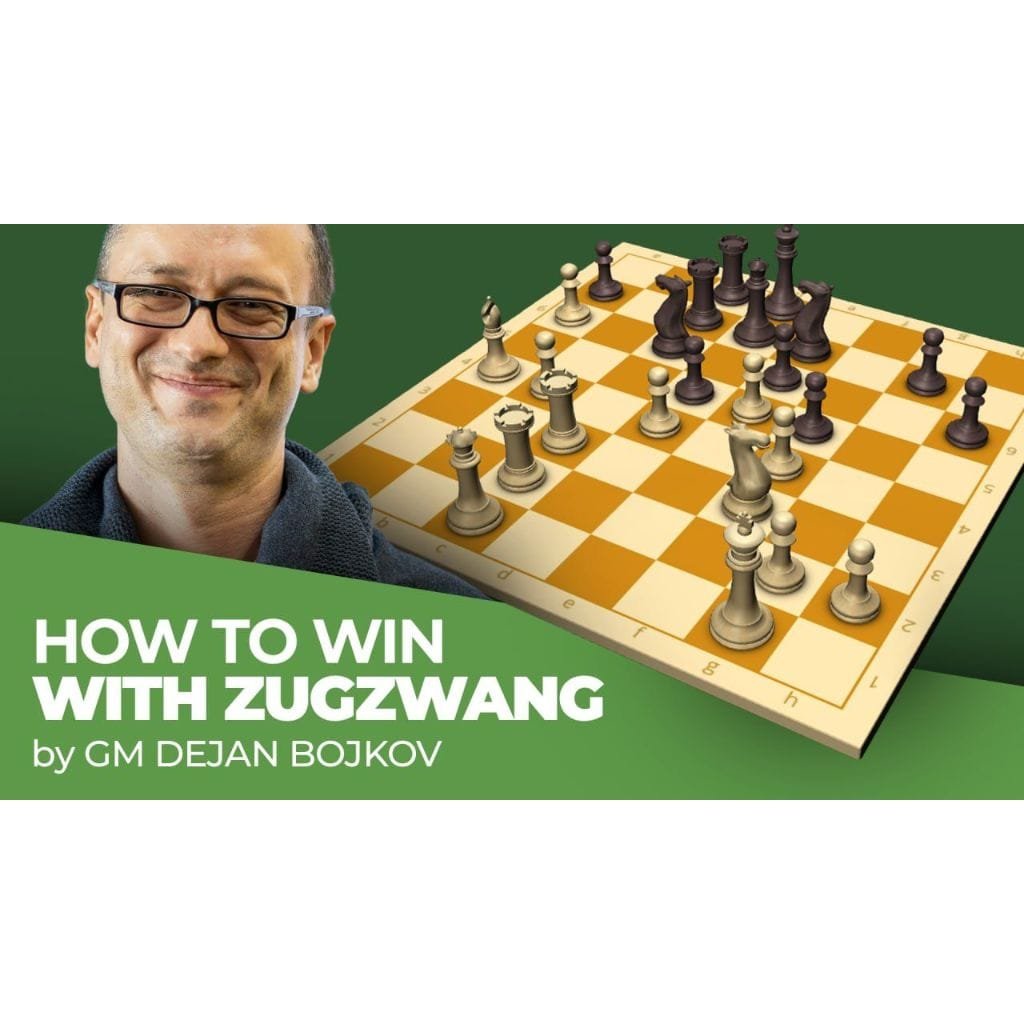
How To Win With Zugzwang by GM Dejan Bojkov (Chesscom Lessons) ( MP4 + PGN )
Original price was: $ 100.$ 5Current price is: $ 5. Quick ViewAdd to cart
7 The Paco Vallejo Method – GM Paco Vallejo
Original price was: $ 100.$ 5Current price is: $ 5. Quick ViewAdd to cart
Must-Know Structures for 1.d4 Players – Part 1 by Mihail Marin
Original price was: $ 100.$ 5Current price is: $ 5. Quick ViewAdd to cart
Erwin’s Opening Lab : The Cozio Defense Chessable
Original price was: $ 100.$ 5Current price is: $ 5. Quick ViewAdd to cart
3 The Lenderman Method 1 – GM Aleksandr Lenderman
Original price was: $ 100.$ 5Current price is: $ 5. Quick ViewAdd to cart
The Elegant English – Part 2 Chessable
Original price was: $ 100.$ 5Current price is: $ 5. Quick ViewAdd to cart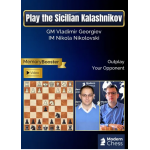
Reviews
There are no reviews yet.